Autistic Burnout Explained Why It Happens and How to Recover

Autistic burnout can look like “suddenly not coping”, but it is rarely sudden. It often builds after months or years of pushing through demands, masking distress, and trying to meet expectations that leave too little room for recovery.
For many autistic people, burnout feels different from ordinary tiredness. Resting for a weekend may not touch it. Sleep can help, but it may not be enough. Skills that once felt manageable, such as cooking, replying to messages, commuting, speaking, working, studying, or tolerating noise, can become much harder.
This article is for information only. It is not a diagnosis or medical advice. If burnout comes with thoughts of self-harm, feeling unsafe, or not being able to meet basic needs, it is important to seek urgent support from a trusted person, GP, local crisis service, or emergency services.

What autistic burnout is
Autistic burnout is a state of deep mental, physical, and sensory exhaustion linked to the long-term strain of living in environments that do not fit autistic needs. It is often marked by a loss of capacity, increased sensory sensitivity, and a reduced ability to manage daily life.
It may affect:
Energy
Everyday tasks feel far heavier than usual.
Communication
Speaking, texting, processing questions, or making decisions may take more effort.
Executive function
Planning, starting tasks, switching tasks, and remembering steps can become harder.
Sensory tolerance
Sounds, lights, textures, smells, and touch may feel more intense or painful.
Emotional regulation
Meltdowns, shutdowns, anxiety, irritability, or numbness may become more frequent.
Skills that are usually available
A person may appear to “lose” abilities, even if those abilities are still there beneath exhaustion.
Burnout can affect autistic children, teenagers, and adults. In adults, it is often misunderstood as laziness, depression, poor motivation, or “not trying”. In children, it may be mistaken for behaviour problems or defiance.
Depression and burnout can overlap, and a person can experience both. One clue is that autistic burnout often has a strong link to long-term overload and unmet access needs. Depression may also include persistent low mood, loss of pleasure, hopelessness, changes in appetite, and other symptoms that deserve clinical support.
How autistic burnout can feel day to day
Autistic burnout is not just feeling busy or needing a break. It can shrink life down to the basics.
A person might wake up already exhausted. They may know what needs doing but be unable to start. The thought of a routine phone call may feel impossible. A supermarket trip may lead to hours or days of recovery. Social contact may feel painful, even with people they love.
Some people describe it as:
running on an empty battery that never fully charges
having a brain that has become slower and less available
being unable to mask or “perform normal” anymore
feeling raw, exposed, and easily overwhelmed
needing silence, darkness, sameness, or withdrawal
losing access to words during stress
feeling ashamed because they can no longer do what they used to do
That shame can be one of the hardest parts. If someone has spent years being praised for coping, overachieving, or seeming “fine”, burnout can feel like personal failure. It is not. It is often a sign that the cost of coping has become too high.

Why autistic burnout happens
Autistic burnout usually has more than one cause. It tends to appear when demands keep exceeding a person’s resources, while recovery stays too small or too rare.
Masking takes a heavy toll
Masking means hiding or suppressing autistic traits to appear less different. It can include forcing eye contact, copying social behaviour, hiding stims, scripting conversation, ignoring sensory pain, or pretending to understand when processing has not caught up.
Masking can sometimes help with safety or social acceptance, but doing it for long periods can be exhausting. It asks the brain to monitor the environment, the body, facial expression, tone, posture, speech, and other people’s reactions all at once.
Over time, this can drain energy that would otherwise go towards eating, resting, learning, working, relationships, and self-care.
Sensory overload keeps the nervous system on alert
Many everyday places are built around sensory norms that do not work for everyone. Bright lights, layered noise, strong smells, crowded buses, scratchy clothing, unpredictable touch, and constant notifications can all add pressure.
A single loud sound may be manageable. A whole day of sensory input with no chance to reset can be different. When this happens repeatedly, the body may stay in a state of high alert.
Demands can pile up faster than recovery
Work, school, parenting, care duties, appointments, housework, money admin, messages, and social expectations all use energy. Autistic people may also spend extra energy on transitions, uncertainty, sensory filtering, and decoding social rules.
A demand does not need to look large to be costly. Making a phone call, entering an unfamiliar building, filling in a form, or changing plans at short notice may all require a lot of processing.
Burnout becomes more likely when life includes too many demands and too few true breaks.
Change and uncertainty can wear people down
Unexpected changes can be especially draining. This might include moving home, starting a new job, exams, bereavement, relationship stress, illness, changes in benefits, or a shift in routine.
Even positive changes can be hard. A holiday, new baby, promotion, or exciting event may still bring extra sensory input, planning, decisions, and transitions.
Lack of understanding makes everything harder
Burnout is more likely when autistic needs are dismissed. Being told to “try harder”, “be more flexible”, “stop being dramatic”, or “everyone gets tired” can push someone deeper into distress.
Support matters. So does being believed.
Common signs of autistic burnout
The signs vary from person to person, but these patterns are common.
Sign | What it might look like |
Reduced capacity | Needing much more time for basic tasks, cancelling plans, struggling with hygiene, meals, or messages |
More shutdowns or meltdowns | Going silent, crying, becoming unable to move, needing to escape, feeling out of control |
Increased sensory pain | Lower tolerance for sound, light, smell, texture, movement, or touch |
Communication changes | Fewer words, slower replies, difficulty explaining needs, needing written communication |
Loss of routine | Difficulty keeping systems that used to work, such as meal plans, calendars, or cleaning patterns |
Social withdrawal | Needing isolation, avoiding contact, feeling unable to be perceived |
Feeling unlike oneself | Numbness, confusion, grief, shame, or fear about reduced ability |
These signs do not mean someone has gone backwards. They often mean the brain and body are protecting what little energy remains.

How to recover from autistic burnout
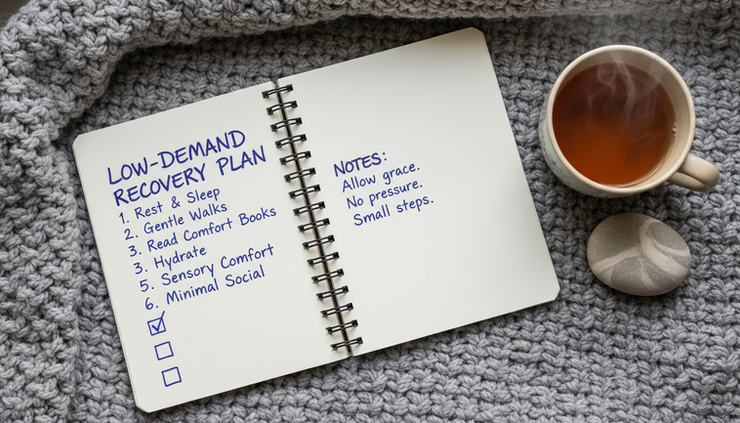
Recovery is usually slow and uneven. It is less like “bouncing back” and more like rebuilding trust with the body. The aim is not to become endlessly productive again. The aim is to reduce harm, restore capacity, and create a life that asks less masking and overextension.
Lower demands before adding solutions
When someone is burnt out, new routines, apps, plans, or self-improvement goals can become more pressure. The first step is often to take things away.
This might mean:
pausing non-essential commitments
reducing social contact for a while
asking for extensions or adjustments
using ready meals, batch cooking, or safe foods
letting some housework wait
postponing decisions where possible
changing communication to text or email
saying no without giving a long explanation
A useful question is, “What can be made easier this week?” Not forever. Just this week.
Protect sensory recovery
Sensory recovery is not a luxury. It can be basic care.
Helpful changes may include:
dimmer lighting or lamps instead of overhead lights
ear defenders, earplugs, or noise-cancelling headphones
soft clothing without irritating seams or labels
sunglasses, caps, or tinted lenses where useful
predictable food textures
fragrance-free products
quiet time after travel, shopping, or social contact
a low-input space at home, even if it is just one chair or corner
Some people need more stimming during recovery. Rocking, pacing, hand movements, pressure, humming, chewing, tapping, or using fidget tools can help regulate the nervous system. Stimming does not need to be stopped unless it is unsafe.
Replace masking with safer honesty
Unmasking does not mean telling everyone everything. It means reducing the pressure to perform at a harmful cost.
Small steps may help:
telling one trusted person, “I have less capacity at the moment”
using scripts such as, “I cannot talk now, but I can reply later”
letting facial expression be more natural
taking breaks without apologising repeatedly
asking for written instructions
refusing plans that require too much recovery
allowing silence in conversation
For some people, full unmasking is not safe in every setting. That is a real concern. The goal is not perfect authenticity at any cost. The goal is to find places, people, and routines where less performance is required.
Rebuild routines gently
During burnout, old routines may break. Trying to restore all of them at once can backfire.
Start with routines that protect the body:
drinking water
eating something predictable
taking medication if prescribed
sleeping and waking at roughly consistent times
washing in the easiest acceptable way
getting outside briefly if it helps
reducing screen input before bed where possible
“Good enough” counts. A snack plate counts as food. Sitting in the shower counts as washing. Opening a window counts as fresh air. Recovery needs fewer moral judgements and more practical support.
Ask for adjustments and support
If work, education, or public services are part of the burnout cycle, adjustments may be needed. In the UK, autistic people may be entitled to reasonable adjustments under the Equality Act 2010, depending on the situation.
Examples could include:
written instructions instead of verbal-only tasks
flexible start times
reduced sensory exposure
a quieter room
predictable schedules
permission to use headphones
fewer last-minute changes
breaks after meetings, lessons, or travel
remote options, where suitable
support with forms, appointments, or benefits processes
Medical support can also help, especially if burnout overlaps with anxiety, depression, sleep problems, eating difficulties, trauma, or physical illness. A GP or autism-informed practitioner may be part of recovery.
What friends, family, and colleagues can do
Support does not need to be complicated. It needs to reduce pressure rather than add to it.
Helpful support sounds like:
“You do not need to reply today.”
“Would text be easier than talking?”
“I can bring food and leave it at the door.”
“Which task would help most if I did it?”
“We can cancel without making it a big thing.”
“I believe you.”
Less helpful support often sounds like:
“Everyone is tired.”
“You were fine last week.”
“You just need to push through.”
“But you managed this before.”
“You should get out more.”
“I know someone autistic and they can do it.”
The difference is pressure. Burnout recovery needs fewer tests of capacity and more respect for limits.
How to prevent burnout returning
Prevention is not about becoming stronger so overload stops affecting you. It is about changing the conditions that caused the overload.
A sustainable life may include:
regular time with low sensory input
fewer commitments packed into one day
predictable routines with room for change
honest communication about capacity
recovery time after demanding events
access to sensory tools without shame
work or study adjustments
relationships where masking is not required all the time
realistic standards for housework, messages, and social life
It can help to track early warning signs. These may be subtle, such as losing words more often, feeling irritated by familiar sounds, skipping meals, avoiding messages, sleeping more, or needing longer to recover after small tasks.
When these signs appear, the answer is usually not to push harder. The answer is to reduce demands sooner.
The main takeaway
Autistic burnout is a serious state of exhaustion caused by long-term mismatch between needs, demands, and recovery. It can affect communication, sensory tolerance, daily living skills, emotions, and health.
Recovery starts with believing the signal. Capacity has dropped for a reason. Lower the load, protect sensory rest, reduce masking where safe, rebuild basic routines gently, and ask for support that makes life easier rather than more demanding.
The goal is not to return to the same pattern that caused burnout. The goal is to build a life with more honesty, more access needs met, and more room to recover before the body has to force a stop.


